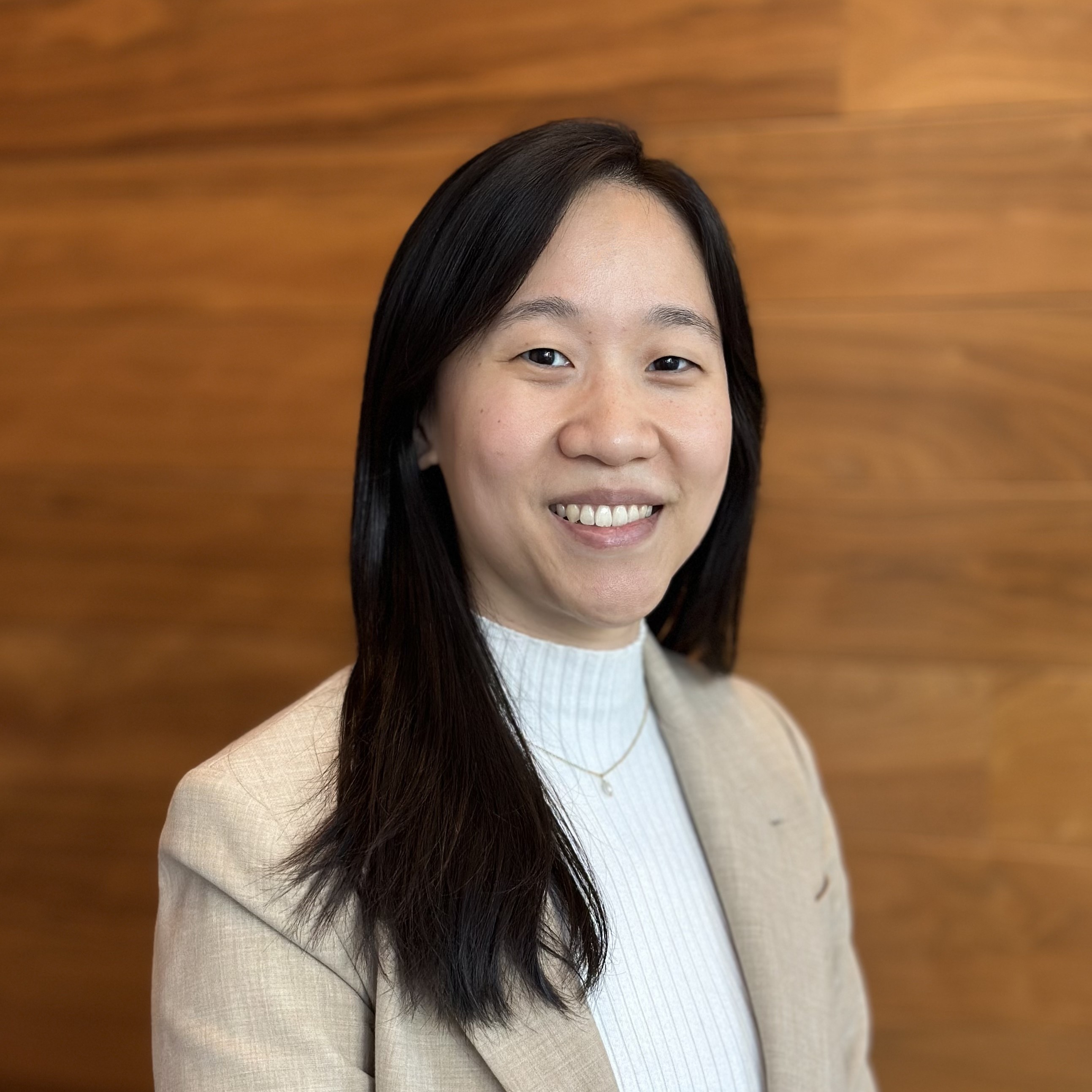
Joy Shi
Epidemiologist. Investigator. Methodologist.
I am an Assistant Professor of Medicine in the Mongan Institute at Massachusetts General Hospital and Harvard Medical School. I hold a secondary faculty appointment in the Department of Epidemiology and CAUSALab at Harvard T.H. Chan School of Public Health. My research focuses on applying and advancing causal inference methods to improve clinical and policy decision-making for chronic diseases. My work leverages large administrative health databases to evaluate the comparative effectiveness of interventions for cancer and cardiovascular diseases.
About Me
Research Interests
My research focuses on developing and applying causal inference methods in real-world data for clinical and policy decision-making. This work evaluates prevention and treatment strategies for chronic diseases, with a particular focus on cancer, cardiovascular disease, and aging-related outcomes, using large electronic health record systems, administrative claims data, and cohort and biobank resources.
Methodologically, my work focuses on developing and applying causal inference methods for settings in which randomized trials are infeasible and unmeasured confounding may threaten valid inference. In particular, I work on instrumental variable approaches, including methods for time-varying treatments and outcomes and their application to Mendelian randomization studies. My research also examines how study design choices affect Mendelian randomization analyses and develops approaches to mitigate common sources of selection bias. More broadly, my methodological interests include target trial emulation, g-methods, and instrumental variable approaches, especially in complex longitudinal settings.
Previous research (during my MSc in Epidemiology at Queen’s University and as a Data Analyst at the Center for Global Child Health at the Hospital for Sick Children) includes work in cancer epidemiology, genetics, and global child health and nutrition.
Teaching
I teach methods for causal inference at the Harvard T.H. Chan School of Public Health (as part of the Department of Epidemiology and CAUSALab).You can find information about some of the courses I teach here, as well as access to some of my teaching and course-related materials here.

Current Roles
- Assistant Professor of Medicine
Health Policy Research Center, Massachusetts General Hospital
Department of Medicine, Harvard Medical School - Assistant Professor in the Department of Epidemiology
CAUSALab, Harvard T.H. Chan School of Public Health
Education
- PhD, Population Health Sciences
Harvard T.H. Chan School of Public Health, USA - SM, Biostatistics
Harvard T.H. Chan School of Public Health, USA - MSc, Epidemiology
Queen's University, Canada - BScH, Life Science
Queen's University, Canada
Currently Teaching
- Fundamentals of Confounding Adjustment, CAUSALab
- Advanced Confounding Adjustment, CAUSALab
- Target Trial Emulation, CAUSALab
- Models for Causal Inference (EPI289), Harvard T.H. Chan School of Public Health
Interests
Publications
You can find a full list of my publications here
* denotes shared first authorship
May 2026
Observational comparative research in cardiovascular and brain health and disease: A scientific statement from the American Heart Association
Mac Grory B, Yeh RW, Beckman JA, Kamel H, Lusk JB, Otto CM, Shi J, Smith EE, Xian Y, Zachrison KS, on behalf of the American Heart Association Stroke Council; Council on Clinical Cardiology; Council on Peripheral Vascular Disease; and Council on Quality of Care and Outcomes Research

May 2026
Long-term benefits of colonoscopy screening on colorectal cancer incidence and mortality: a randomised, controlled trial
Kaminski MF, Kalager M, Løberg M, Emilsson L, Macios A, Samy F, Shi J, Fielding S, Hernán MA, Garborg K, Rupinski M, Dekker E, Spaander M, Holme Ø, Zauber AG, Pilonis ND, Didkowska J, Spychalski P, Hoff G, Regula J, Adami HO, Bretthauer M for the NordICC Study Group
December 2025
Evidence for clinical treatment decisions without randomized data
Shi J, Wasfy JH
August 2025
Mendelian randomization, lipids and coronary artery disease: trade-offs between study designs and assumptions
Shi J, Swanson SA, Diemer EW, Gerlovin H, Posner DC, Wilson PW, Gaziano JM, Cho K, Hernán MA on behalf of the VA Million Veteran Program
April 2025
Effect of colonoscopy screening on risks of colorectal cancer and related death: instrumental variable estimation of per-protocol effects
Shi J, Løberg M, Kalager M, Wieszczy P, Pilonis ND, Adami HO, Kaminski MF, Bretthauer M, Hernán MA, for the NordICC study group
November 2024
Reparations for African enslavement in the U.S. and Black survival using the Panel Study of Income Dynamics
Lawrence JA*, Jahn JL*, Shi J*, Himmelstein KEW, Feldman JM, Linos N, Bassett MT
September 2024
Methodological approaches to structural change: epidemiology and the case for reparations
Lawrence JA*, Shi J*, Jahn JL*, Himmelstein KEW, Feldman JM, Bassett MT
August 2024
PSA screening and prostate cancer mortality: an emulation of target trials in U.S. Medicare
García-Albéniz X, Hsu J, Etzioni R, Chan JM, Shi J, Dickerman BA, Hernán MA
January 2023
Risk prediction models for endometrial cancer: development and validation in an international consortium
Shi J, Kraft P, Rosner BA, Benavente Y, Black A, Brinton LA, Chen C, Clarke MA, Cook LS, Costas L, Dal Maso L, Freudenheim JL, Frias-Gomez J, Friedenreich CM, Garcia-Closas M, Goodman MT, Johnson L, La Vecchia C, Levi F, Lissowska J, Lu L, McCann SE, Moysich KB, Negri E, O'Connell K, Parazzini F, Petruzella S, Polesel J, Ponte J, Rebbeck TR, Reynolds P, Ricceri F, Risch HA, Sacerdote C, Setiawan VW, Shu XO, Spurdle AB, Trabert B, Webb PM, Wentzensen N, Wilkens LR, Xu WH, Yang HP, Yu H, Du M, De Vivo I
October 2022
Effect of colonoscopy screening on risks of colorectal cancer and related death
Bretthauer M, Løberg M, Wieszczy P, Kalager M, Emilsson L, Garborg K, Rupinski M, Dekker E, Spaander M, Bugajski M, Holme Ø. Zauber AG, Pilonis ND, Mroz A, Kuipers EJ, Shi J, Hernán MA, Adami HO, Regula J, Hoff G, Kaminski MF
Teaching
I teach courses in epidemiologic and causal inference methods. You can find a complete description of my teaching experience here.
Epidemiologic Methods III - Models for Causal Inference (EPI289)
2023 - Present
Harvard T.H. Chan School of Public Health
Causal inference is a fundamental component of epidemiologic research. This course describes models for causal inference, their application to epidemiologic data, and the assumptions required to endow the parameter estimates with a causal interpretation. More information available here.
Comparative Effectiveness Research I (CI722)
2021 - 2023
Harvard Medical School
This course introduces causal interference methodology for settings in which randomized trials are not available. The course focuses on the use of epidemiologic studies, electronic health records and other sources of observational data for comparative effectiveness and safety research. More information available here.
Comparative Effectiveness Research II (CI732)
2022 - 2023
Harvard Medical School
This course builds on the foundational concepts from CI 722 and applies them to real-world comparative effectiveness research. Advanced topics relevant to comparative effectiveness research will be discussed, including the target trial framework, time varying exposure and confounding, analysis of longitudinal data, and sensitivity analysis. More information available here.
Fundamentals of Confounding Adjustment
2025 - Present
CAUSALab
Causal inference from observational data often relies on appropriate adjustment for confounders. This online course uses a combination of video lectures and hands-on exercises to introduce different methods to adjust for confounding in the context of time-fixed treatments. More information available here.
Advanced Confounding Adjustment
2023 - Present
CAUSALab
In time-varying settings, advanced g-methods for confounding adjustment—inverse probability weighting and the parametric g-formula—are needed. This course focuses on the implementation of these methods in increasingly complex analytical settings using a combination of lectures and hands-on sessions. More information available here.
Target Trial Emulation
2022 - Present
CAUSALab
Causal inference from observational data can be conceptualized as an attempt to emulate a pragmatic randomized trial—the target trial. Through a combination of lectures and hands-on sessions, the course introduces the target trial emulation framework in increasingly complex settings and dissects examples of emulations in the health sciences and related fields. More information available here.
Directed acylic graphs
An introduction to the basic components of a directed acyclic graph (DAGs), how to identify structural sources of bias (i.e., confounding, selection bias, information bias) using a DAG, and extensions to time-varying treatments.
Standardization for time-fixed treatments
Standardization for time-fixed treatments is described, with a focus on (1) how to interpret standardized estimates, (2) how to use models to estimate standardized estimates, and (3) the use of bootstrapping to obtain 95% confidence intervals.
Instrumental variable estimation for time-fixed treatments
Instrumental variable (IV) estimation for time-fixed treatments, with an emphasis on the underlying assumptions of IV, common estimators for IV, and implementation of the methods in R.
Measurement bias
Structures and mechanisms of different types of measurement bias.
Introduction to time-varying treatments
An introduction to formulating causal questions for time-varying treatments, depicting time-varying treatments on a directed acyclic graph and understanding why conventional methods fail.
Talks
You can download slides from some of my recent talks below.
Software
Below, you’ll find some of my statistical code from various projects and publications.
A full list of my programs are available on my Github page.
Let's Connect
Contact Information
Feel free to reach out to connect! I'm always interested in hearing about new projects and opportunities.
GitHub
github.com/joy-shi1Location
Boston, Massachusetts